

Kitespot Sylt in Germany
14.09.2026
Written by Lasse
![[ALT-TEXT]](https://files.naiton.com/fileservice/2660273f-9586-41c1-bc53-a13f91d66e18-sylt-kitesurfen-strand-hero-1000x420.jpg)
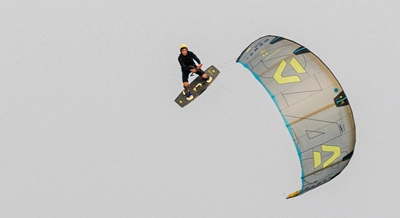
Kitesurfing on Sylt means this: it is the only spot on the German coast where you can more or less pick your wind direction. At its narrowest point the island is just a few hundred metres wide, so you switch sides instead of writing off the day. Then there is the range on offer: knee-deep standing water in the north, a shallow lagoon in the south, proper North Sea waves in the west.
Every Sylt kitespot at a glance
Kitesurfing on Sylt: why the island works in almost any wind
At the mainland spots on the North Sea, the wind direction decides whether you get on the water at all. On an easterly, St. Peter-Ording, Büsum and Cuxhaven are offshore and therefore off limits. On Sylt you drive twenty minutes down to Hörnum and have the exact same system sideshore on the Wadden Sea side. That is what makes the island the most reliable target for a kite trip of several days: you plan around the right side of the island, not around a weather window.
The price you pay is planning. Every spot has its own window in the tide, its own zone boundaries, and plenty of current on the Wadden side. Once you understand how the four areas work together, though, you get more days on the water here than at any other German spot.
| Ellenbogen, List | Kitesurfing at the Lister Ellenbogen means standing depth in the Königshafen, a bay of roughly four square kilometres that opens to the east. It works in every wind direction; northerlies come over land and are gusty. The kite area is bounded by a line of buoys and you ride in the window around high tide. Beginner to advanced, freestyle and big air. |
| Möwennest, Hörnum | Kiting at the Möwennest is the island's east wind spot. Behind the sandbank offshore, a shallow lagoon forms as the water runs out, so the window here sits around low tide. Standing depth in places, but with noticeable current and no line of buoys. Freestyle and foil, beginner to advanced. |
| Westerland | Kitesurfing in Westerland means open North Sea on west, northwest and southwest. Short standing area, shorebreak and current, completely offshore on an easterly. The sets run cleanest around low tide, when small pools of flat water form in places. Improver to pro, wave and big air. |
| K4, Puan Klent | The wave spot in the south of the west coast, again every westerly direction. Around low tide the longest and cleanest waves on the island run here. No swimming zone and no lifeguards, but there is a surf school on the beach that you keep your distance from. For advanced riders. |
Wind, water temperature and the best time to visit Sylt
Sylt sits exposed enough to catch the wind earlier and stronger than the bays on the mainland. Across the year, the stations on the island measure around 14 knots from west to southwest, with gusts around 20 knots. The windiest stretch runs from October to March, while the best balance of wind and water temperature comes in April to June and in September and October. Midsummer goes light more often, because the thermal here is weaker than in the Mediterranean.
| Average wind | Around 14 knots, gusts around 20 knots |
| Main wind direction | West to southwest |
| Windiest months | October to March |
| Best time to visit | April to June and September to October |
| Water temperature | Winter 4 to 5 °C, spring around 8 °C, summer 17 to 19 °C, autumn around 13 °C |
| Air temperature | Around 11 °C during the day, averaged over the year |
| Tide | Relevant at every spot, tidal range larger in westerly conditions and at new and full moon |
| Riding areas | Standing depth and flat water on the Wadden side, waves and shorebreak in the west |
![[ALT-TEXT]](https://files.naiton.com/fileservice/dc1b896e-71bb-42dc-b442-ad4389a11b41-sylt-kitesurfen-bigair-hero-1000x420.jpg)
Gear for Sylt: kites, board and wetsuit
- Kites: Two sizes cover most days, classically a 9 and a 12 square metre at around 75 kilos. In autumn a 7 belongs in the bag, since days with 30 knots plus are no exception here. For summer, a big light wind size is worth having.
- Boards: Twintip for the Wadden side and flat water, plus a strapless surfboard for Westerland and K4. Foil only works at the Ellenbogen with enough water under you, so plan on a short mast or on the window around high tide.
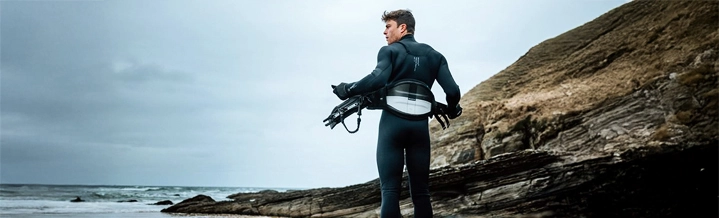
- Wetsuit: April to June 5/4/3 with hood, July to September 4/3, October and November 5/4 with hood and gloves, winter 6/5/4 with everything.
- Booties: Compulsory, not optional. Oysters out on the flats.
- Protection: Helmet and impact vest for the west side. The shorebreak there forgives very little, experienced kiters included.
Nature protection and kite zones on Sylt
Sylt lies inside the Schleswig-Holstein Wadden Sea National Park. Kiting and winging are banned there as a rule and permitted only in designated zones, laid down in the North Sea navigation ordinance (Nordsee-Befahrensverordnung). In practice that means buoy lines are boundaries and not suggestions, bird and seal protection areas stay unridden, and you keep away from swimming zones and from the groynes on the west side. The information boards at the spot are more current than any article, so read them before your first session. If you are unsure, ask one of the kite schools on the island which zoning rules apply.
Learning to kitesurf on Sylt
For a first course, Sylt is a solid choice but not the easiest one. The standing area at the Ellenbogen gives you exactly the conditions that make a course safe, but tide and current come on top, which you do not get at the standing spots on the Baltic. If you are travelling purely to learn, you will progress faster at Wulfener Hals on Fehmarn or at the Graswarder in Heiligenhafen. If you like the island anyway, book locally with one of the schools in List, Hörnum or Westerland and you come out of the course with four riding areas for the days that follow.
Frequently asked questions about kitesurfing on Sylt
| When is the best time? | April to June and September to October. The windiest months are October to March, and then you need a winter wetsuit. |
| Which kite size? | A 9 and a 12 square metre cover most days at around 75 kilos, plus a 7 in autumn. |
| How cold is the water? | 17 to 19 °C in summer, around 8 °C in spring, 4 to 5 °C in winter. |
| Does Sylt work for beginners? | Yes, at the Ellenbogen and the Möwennest. The west side is nothing for your first days on the water. |
| Can I kite anywhere? | No. Only in the designated zones, outside them kiting is banned inside the national park. |
![[ALT-TEXT]](https://files.naiton.com/fileservice/1543dd02-3550-451e-9084-a334a4630358-290x200.jpg)
You have no product(s) in you basket.
Weet je niet waar je moet beginner?
Contact our customer service for advice
