


Going on a kite holiday? This is what you need to know!
11.02.2026
Going on a kite holiday? This is what you need to know!
A kitesurf trip is often the highlight of your season. New spots, steady wind, sunshine and most importantly: as much time on the water as possible. But nothing is more frustrating than arriving at your destination and discovering you forgot that one essential item or your gear is damaged. With this complete guide, you’ll know exactly what to bring and what to keep in mind when planning your kitesurf holiday.
In this travel blog:
- 1. Check your kite spot before going on holiday
- 2. Which kites should you bring on a kitesurf trip?
- 3. What size twintip / directional should you bring on your kite holiday?
- 4. Choose the right wetsuit for your kite holiday
- 5. Check your kite bar before you travel
- 6. What should you not forget on your kite holiday?
- 7. What size boardbag do you need for your kite trip?
- 8. How do you pack your kitesurf boardbag?

Check your kite spot before going on holiday
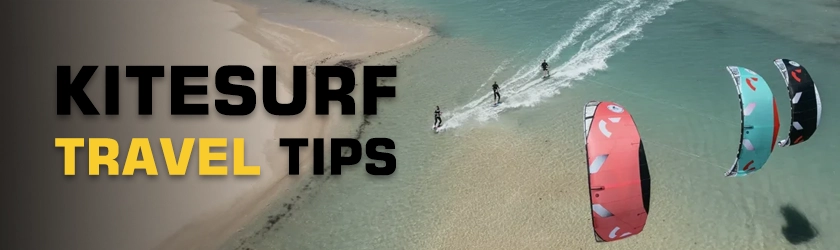
Almost everything you bring on your kite trip depends on the spot you’re going to. The spot determines which kite sizes, wetsuits (or not), sunscreen, lycras, boards you’ll need and ultimately which boardbag size is suitable to carry all your gear. You’ve probably already done plenty of online research about your favorite kite spot, but pay extra attention to the average wind and water temperature at your destination.
(sometimes the average wind speed can be misleading because you might have 8 knots one day and 20 knots the next. The average would be 14 knots, but that still includes one epic kite day. So do some extra research if needed.)
Which kites should you bring on a kitesurf trip?
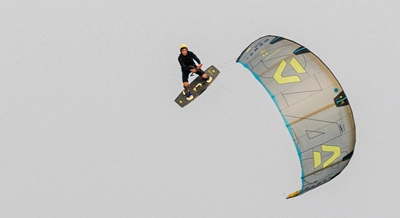
Now that you know how much wind there is on an average kite day, you can decide which kites to bring. This completely depends on your weight, level and riding style. A big air kitesurfer will bring larger kite sizes than a wave rider. Assuming you are a 75 kg kitesurfer who loves freeride, we recommend the following:
- If you have two kites? Bring a 9 and 12
- If you have three kites? Bring your 8, 10, 12
Of course, these are broad assumptions and depending on your level, riding style and the average wind on a kite day, you can deviate from this. For example, are you going to Paje Beach in Tanzania? Then you can leave your smallest size at home and bring an extra large lightwind kite. But heading for storms in South Africa? Leave your biggest kite at home and bring an extra small size instead.
Check out useful travel gear here
What size twintip / directional should you bring on your kite holiday?
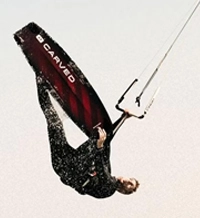
Your kiteboard is actually the item you need to think the least about. Most kitesurfers will go on a trip with their twintip. If you’re a beginner and expect to make a lot of progress, it’s recommended to bring a more advanced board instead of your big, bulky beginner board. But if you’re already an advanced kitesurfer and you’re completely dialed in on the twintip you have now, there’s no need to upgrade it. Of course, your holiday is always even more fun when you get to hit the water with new gear.
If you’re going on a kite trip with a surfboard, it’s a good idea to check how high and steep the waves are. There’s a big difference between the surfboard you’d want to use in the barrels at One-Eye (Mauritius) and the more mellow waves in Brazil. Those going to One-Eye will know what they’re getting into and will bring a fast, thin, pointy surfboard. If you’re doing downwinders in Brazil and you’re a bit less advanced, you’ll want a surfboard that’s a bit wider with more volume, so you’ll feel comfortable on your directional more quickly. We understand that the choice isn’t easy. Can’t figure it out? No problem—contact us and we’ll be happy to help. We’ve been almost everywhere in the world on both twintip and directional!
Choose the right wetsuit for your kite holiday
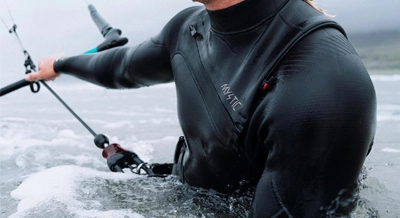
For some kitesurfers it’s a dream to finally kite without a wetsuit in places like Bonaire or Brazil. Others go looking for the storms of the ‘Cape Doctor’ in South Africa and focus on wind speed, where the water can sometimes be a bit colder. Don’t be fooled by the air temperature either—it can be high (like in Cape Town), but the water can be deceptively cold! So make sure to check that properly. Below is a broad estimate of what you can wear in different water temperatures—of course this differs per person. If you get cold easily, don’t try to act tough and bring that wetsuit. Are you always warm? Then you might enjoy endless ‘tanning time’ on the water and come back from your trip with a real ‘kitesurfer tan’.
- Warm water (20°C+): shorty or lycra
- Moderate (15–20°C): 3/2 mm wetsuit
- Cold water (below 15°C): 4/3 mm or 5/4 mm wetsuit
Check your kite bar before you travel
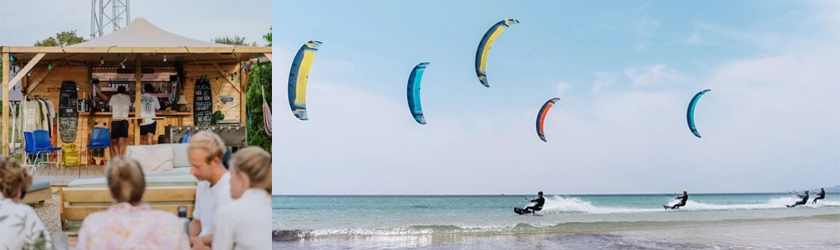
You’re almost fully packed, just your bar left. Your bar is the most vulnerable part of your gear and can easily put a damper on your kite trip if something breaks. That’s why we always recommend bringing an extra bar. It might be an investment, but on a kite trip it gives you the fastest possible fix to get back on the water. No hassle with spare parts or repairs—just get back to kiting. During your session you can have the local repair shop fix your bar, and you’ll be fully set again. Of course, not everyone is able to bring an extra bar on their kite trip. In that case, make sure to do the following:
- -Check your bar before you go
- -Pay extra attention to the depower, safety & trim line
- -Remove knots from your lines
- -Check the pigtails for wear
In that case, also make sure to bring spare parts for the most vulnerable parts of your bar, which are:
- -Safety line
- -Depower line
- -Trim line
- -Extra line set (optional)
What should you not forget on your kite holiday?
If you thought you were really almost packed, make sure to check the following items as well:
- -Of course your harness, definitely don’t forget it
- -Leash
- -(Electric) pump
- -Spare harness rope
- -Good waterproof sunscreen (Island Tribe or P20)
- -Lip balm with SPF
- -A key pod for your car keys
- -Waterproof phone case
- -Altimeter
- -Poncho
- -Helmet
- -Screwdriver
- -Padlock for your boardbag
- -Boardbag scale
- -Impact vest
We can’t give you advice on the rest of your clothing style, but we’re sure you’ll look great ;)
Kitemana Youtube Channel
Kitemana Youtube Channel
Check out our YouTube channel for the best kite videos about gear, travel and product reviews.
What size boardbag do you need for your kite trip?
You’ve finally gathered everything and you’re sure you have it all. How do you get all that gear safely into your boardbag so it can travel around the world? There are a number of handy tricks to help prevent damage during transport as much as possible. Nothing is more frustrating than arriving with broken gear.
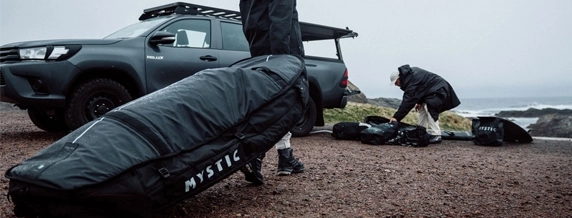
First, you need to choose the right boardbag. It’s important to choose a boardbag that is at least as big as your kiteboard. Often your boardbag is even slightly bigger, because that makes it easy to bring all your gear. Roughly speaking, an average boardbag is between 150cm and 170cm long. Depending on the number of kites you bring, you’ll usually choose your boardbag accordingly. A boardbag with wheels is recommended, as it saves a lot of hassle at the airport.
- -Bringing two kites? Then you can choose a 150cm boardbag.
- -Bringing 2-3 kites? Then choose around 170cm
- -Bringing more than three kites? Then look for something larger than 170cm
Make sure you carefully check with your airline what the maximum dimensions and weight are for allowed checked baggage. You may need to book extra luggage or meet certain standards to bring your gear.
Extra tip: put an AirTag in your boardbag so you always know where it is, even if it accidentally gets lost.
How do you pack your kitesurf boardbag?
Packing your boardbag can be a challenge, but there are a number of handy tips that make packing easier and, most importantly, ensure your gear is even better protected during your trip.
- 1. Start with your kiteboard (twintip). Always remove the fins. Wrap your board in a towel for extra protection. You can leave the bindings on.
- 2. Put your fins and screws in a separate compartment or small bag so you don’t lose them.
- 3. Roll your kites as small as possible and place them on top of your kiteboard.
- 4. Put your harness in the nose of your boardbag for extra protection.
- 5. Place your bar between your kites in a protected spot.
- 6. Fill the remaining space with clothing, towels, socks and wetsuits.
- 7. Finish with a poncho or towel on top for extra protection.
Now that your boardbag is packed, it’s time for perhaps the most exciting moment: weighing it. Is it light enough for the airline? Great! Too heavy? Put the bindings in your carry-on luggage to save weight. Don’t forget an AirTag or other tracking device to avoid travel stress.
You have no product(s) in you basket.
Not sure where to start?
Contact our customer service for advice

Manage Cookie Consent
We like to give you the best experience and most relevant deals on our website, media and through our advertisements. To do that, we need to place cookies and collect some data. If you are ok with this, press the green accept button! For more information click here or change settings to your preference.
Functional
Always active
Analytics cookies
Advertising cookies
User data sharing
Personalization cookies