
Learn to kitesurf: how to get started
18.11.2026
You learn to kitesurf by taking lessons at a kitesurfing school: in three steps, from kite control through body dragging to the water start, you learn to ride on your own. Kitesurfing always looks extreme. Still, almost anyone can learn this sport. Kitesurfing isn't dangerous, as long as you take lessons and know what you're doing.
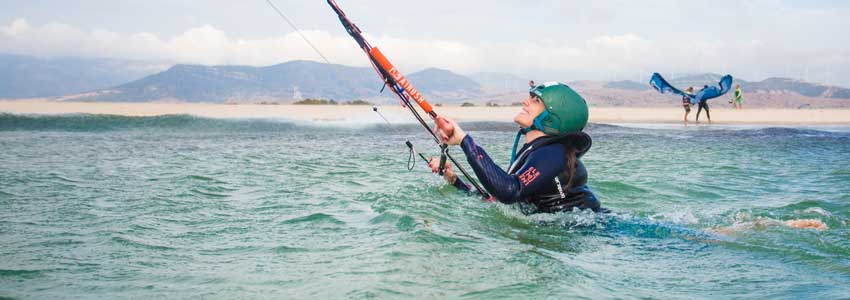
| First step | A lesson at a kitesurfing school. They provide all the gear. |
| Steps | Kite control, body dragging and the water start. |
| How long | Usually three to five lesson days, about 10 to 12 hours of lessons. |
| What you need | Be able to swim in open water. You don't need to be super fit or strong. |
| After that | Your own gear: wetsuit, harness, board and kite. |
How do you learn to kitesurf?
You learn to kitesurf at a kitesurfing school, in three steps: first you learn to steer the kite, then you body drag in the water, and finally you do the water start. So the first thing to do is find a good school near you, or where you're going on holiday. Kitesurfing lessons are a must if you want to get the hang of it properly and safely. You can choose private lessons or learn in a small group.
Step 1: kite control and safety
Your first lesson starts with a powerkite: a small kite without a board that teaches you how to steer and how the kite pulls. You keep practising until you have it under control. That matters, because later, during your water start, you need to dive the kite (steer it hard through the power zone) in a controlled way.
Once you've got that, you move on to a real kite, the kind used on the water. Your instructor shows you how to set it up and attach the lines. You also learn how the safety system works, so you know what to do if something goes wrong. Then your instructor explains the wind window. When all of that is clear, you get to know the kite yourself: steering it, and using depower and power. Depower means taking power out of the kite by pushing the bar away. That's usually the end of lesson 1, so within one lesson you've already flown a real kite.
Step 2: body dragging
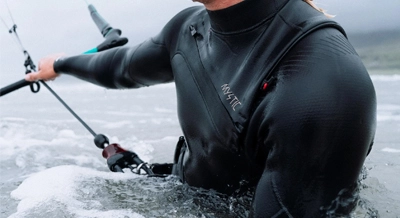
In the next lesson, once you have the kite under control, you move on to body dragging. Body dragging means you go into the water with your kite for the first time and let it pull you along, without a board. With your instructor close by, you practise diving the kite hard to build up power. You also learn to body drag upwind, so you can get back to your board after a fall.
Diving the kite hard is exactly what you need for a water start later. Without kite control there's no successful water start, which is why body dragging is such an important part of learning to kitesurf.
Step 3: the water start
The last step to becoming a real kitesurfer is the water start. The name says it all: you practise riding your first metres on a board. First you learn to get the board on your feet on your own while keeping the kite in the air. That's harder than it sounds, because you'll be tempted to pull on the bar by accident. Once that works, the moment is close: you dive the kite and get pulled up out of the water.
During lessons you always practise on a bigger board. A bigger board picks up speed more easily than a small one and is more stable for a beginner, so you'll ride away sooner. The water start is the hardest part to get. Not working right away? Don't worry, every kiter has been through this phase. Spending as much time on the water as you can is the fix.
How long does it take to learn to kitesurf?
Most people take three to five lesson days to learn to kitesurf, around 10 to 12 hours of lessons in total, before they can ride on their own. How fast it goes depends mostly on the wind: if there's too little or too much, your lesson gets moved. If you live close to your school and can plan flexibly, you'll finish sooner. Experience with a board sport like snowboarding, wakeboarding or windsurfing helps, and so does practising with a powerkite beforehand. You're not quite there after your lessons, though: riding upwind and your first jumps come from lots of practice on your own.
Where is the best place to learn to kitesurf?
The best place to learn to kitesurf is a spot with shallow or flat water, steady wind and plenty of space, with a kitesurfing school you can reach easily.
- Shallow water: You can stand up after a fall and walk back to your board instead of swimming.
- Steady wind: Every lesson hour counts. Gusty wind makes the kite hard to read.
- Space: You stay clear of other kiters, swimmers and anything hard on the beach.
On the coast, schools often teach when the wind blows towards the beach, so you drift back to shore safely. You can also take a course somewhere warm. Read our tips for when you go on a kite holiday.
Are you ever too young or too old to learn to kitesurf?
There's hardly an age limit for learning to kitesurf: anyone can start, young or old. Our colleague Lucas even started kitesurfing lessons when he was ten. For children it's mostly about weight. The kite has to be small enough, so ask the kitesurfing school from what age and weight they teach. Starting later in life works fine too, because the kite is attached to your harness and you don't need much strength.
Should you rent or buy kitesurfing gear as a beginner?
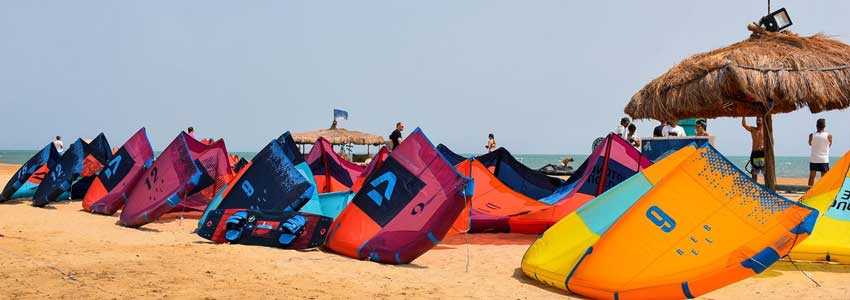
During your lessons you rent everything from the kitesurfing school; you buy your own gear once you can ride on your own. By then you also know better which kite size and which board suit you and your spot. You can't keep renting from the school forever, of course. If you go out often, your own gear works out cheaper and you can hit the water as soon as the wind picks up. Don't want to buy everything new straight away? Have a look at a second-hand kite.
Which gear do you buy first after your lessons?
After your lessons you need a wetsuit, a harness, a kiteboard and a kite with a bar. The choice can feel like a maze, with loads of options in every price range, so start by working out your budget. Our guide to kitesurfing equipment for beginners walks you through each part. If you'd rather buy everything in one go, our complete kitesurf sets have you covered.
Your first wetsuit
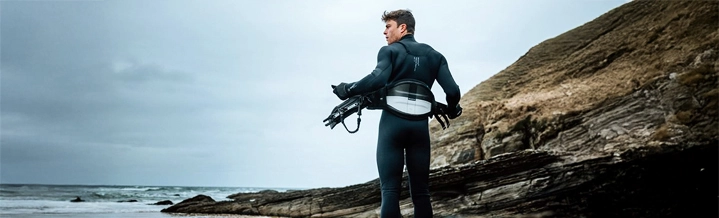
You don't want to get cold during your first sessions, so a wetsuit comes first. Fit and thickness matter most. How thick it should be depends on the water temperature where you kite, and our wetsuit guide explains which thickness suits which season. Sizing can be tricky at first, so check the manufacturer's size chart to make sure the suit fits.
A harness for beginners
Next up is the harness. As a beginner you're best off starting with a seat harness. It's more comfortable for beginners, because you'll often have your kite at 12 o'clock, straight above you. Once you can ride back and forth comfortably, you could go straight for a waist harness instead. You'll enjoy it longer, because you won't outgrow it as quickly. The downside of a waist harness is that it rides up more easily.
A kiteboard for beginners
For a good beginner board, look at an all-round freeride twintip, like our beginner kiteboards. You choose the size based on your weight and how much wind you want to ride in. How to work that out is in our guide to your first kiteboard. Whatever you do, don't start on a board that's too small. The smaller it is, the harder your first sessions get. A bigger board keeps its speed more easily and rides upwind better.
The kite: new or second-hand
Then the big purchase: the kite. You can buy a new kite or a cheaper second-hand one, and Kitemana has both. Most beginners start with one kite and add one or two later for more wind range. As a beginner, we recommend an easy-going freeride kite. These have more depower than, say, an advanced freestyle kite, which makes starting out safer and easier. Which kite fits you, and which size to pick for your weight and the wind you ride in, is explained in our guide to your first kite. You'll find all suitable models in our beginner kites.
How do you keep progressing after your lessons?
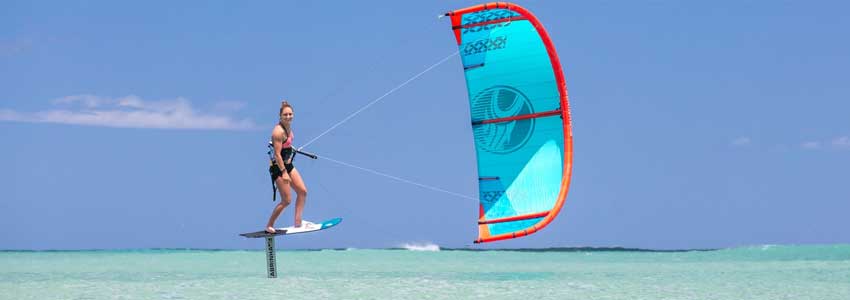
After your lessons, it's mostly about practising on your own: learning to ride upwind, then your first jumps and rotations. Once you've learned to kitesurf, you'll notice you keep wanting to go back to the beach. That's the addictive side of kiteboarding. Even when the wind drops for a while, you'll be itching to go, and the moment it picks up again you're heading straight for the beach. The upside of this addiction is that you get fit and it clears your head. There's nothing better than a windy day at the beach.
Above all, kitesurfing is about having fun with your kite mates. In the beginning, go out with someone who can already kite if you can, and read our tips on kitesurfing and safety.
Frequently asked questions
Do you need to be able to swim to learn to kitesurf?
Yes, for kitesurfing lessons you need to be a good swimmer and feel comfortable in open water. You wear a wetsuit, a helmet and often an impact vest during your lessons, but you'll spend a lot of time in the water. You don't need to be super fit or strong: the kite is attached to your harness, so your arms do little work.
Are private or group lessons better?
Private and group kitesurfing lessons both work. With private lessons you learn fastest per hour. In a small group you get a bit more breathing room, because you learn from watching the others and get the odd break. Groups are usually small, so the instructor can coach everyone personally.
Is kitesurfing hard to learn?
Kitesurfing isn't hard to learn with good lessons, but it does take patience. Steering the kite usually clicks in the first lesson. The water start takes most people the longest, because you have to control the kite and the board at the same time. After three to five lesson days most people can ride on their own. Feeling at home in all conditions takes a lot more time on the water.
Can you teach yourself to kitesurf?
Teaching yourself to kitesurf is technically possible, but we strongly advise against it. A kite generates a lot of power. Without lessons you don't know the safety system, the wind window or how to handle gusts, and that's when people get dragged or hurt, sometimes others on the beach too. A kitesurfing school also gets you riding much faster than trial and error. Take lessons first, then practise on your own.

You have no product(s) in you basket.
Not sure where to start?
Contact our customer service for advice
