

Kitesurfing in Tarifa: Spot guide
04.11.2026
Written by Lasse
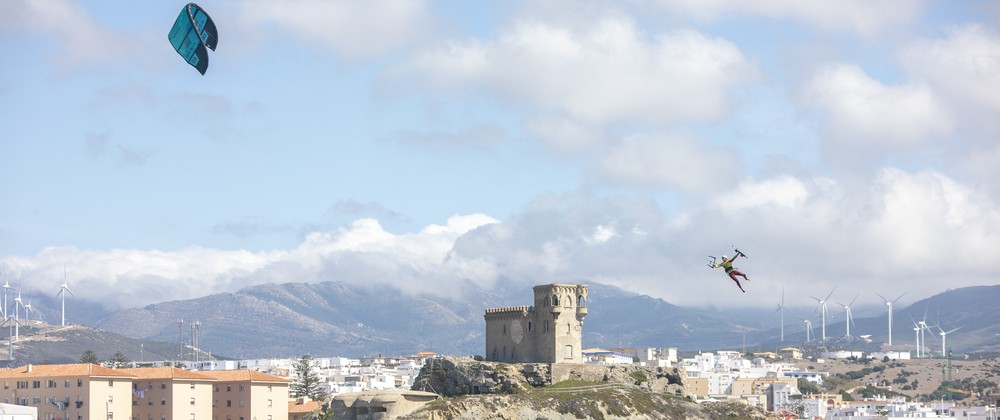
Tarifa kitesurfing comes down to two winds and three spots, and picking the right combination makes your day. On Poniente, head to Los Lances. On Levante, go to Valdevaqueros. Balneario is the big air spot right by the old town, works only on Levante and belongs to the pros. Here is which spot suits your level, when to go and how to get there.
The kite spots in Tarifa on the map
Tap a pin to see the wind and level for each spot.
Why is Tarifa Europe’s kitesurfing capital?
Tarifa is Europe’s kitesurfing capital because hardly anywhere else has wind this reliably. The Strait of Gibraltar squeezes the air between the Atlantic and the Mediterranean. Morocco is only 14 kilometres across the water, and on a clear day you can see the mountains on the other side.
Before the kites arrived, the beach belonged to the windsurfers. In the 1990s Tarifa was the centre of the windsurfing scene, and today it is the centre of kitesurfing. The competitions show it. The Tarifa Kite Pro was the first world-class strapless freestyle contest in 2015, and the GKA World Tour has stopped here since 2016. The GKA Big Air World Championships ran at and off Balneario in 2022 and 2023, and the GKA Youth Kite World Championships came to Valdevaqueros in 2024.
In practice that means you will sometimes share the water with riders you normally only see in edits.
Levante and Poniente: which wind blows when?
Two winds run everything in Tarifa. The Poniente comes from the west off the Atlantic and blows side-onshore. It brings around 60 percent of the kiteable days, usually at 3 to 5 Beaufort. The Levante comes from the east off the Mediterranean, blows side-offshore and is gustier. It accounts for about 20 to 30 percent of days, arrives every few weeks and then usually lasts three to five days.
The funnel effect of the Strait boosts both winds, and on some days they reach 6 to 8 Beaufort. The Levante blows more often in summer, the Poniente during the rest of the year. Keep an eye on the Levante, because it can keep building through the day. When it is strong and gusty, launch right at the water’s edge, keep the kite low instead of parking it at 12 o’clock and get into the water quickly. Further out the wind is less gusty, but it stays offshore.
- Wind from the east is Levante. Head to Valdevaqueros, or Balneario if you are a pro.
- Wind from the west is Poniente. Los Lances is your first choice.
- Light Poniente and sunshine? Valdevaqueros often has more wind than Los Lances.
- Strong Poniente from 18 knots? Los Lances usually works better.
Which Tarifa kite spot suits your level?
For most riders, Los Lances on Poniente is the best place to start, Valdevaqueros is the safer choice on Levante, and Balneario is for pros only. The table shows where to go in which wind at a glance.
| Spot | With Levante | With Poniente | Level |
|---|---|---|---|
| Los Lances | offshore and gusty, intermediates and up only | side-onshore, waves | all levels, beginners only with a school |
| Valdevaqueros | slightly lighter, the safest Levante option | thermal boost on light Poniente days | all levels |
| Balneario | offshore, flat water and kickers | does not work, strong current | pros only |
Los Lances
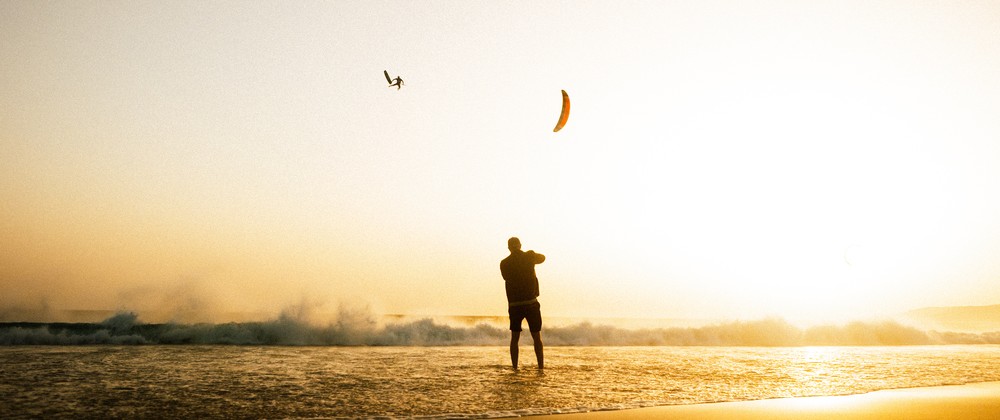
Los Lances is the long, wide sandy beach between the town and Valdevaqueros, and it is Tarifa’s main spot. On Poniente this is where you want to be. The wind comes in side-onshore, which gives you a safety margin, and that is why most kite schools teach here. The catch: the Poniente brings waves that often break right at the shore, so getting out is rougher than the wide beach suggests.
On Levante, Los Lances is a different place. In the southern part the wind is offshore, turning side-offshore further north. If you cannot hold your ground upwind, you drift out. On Levante days this beach is for intermediates and up only.
When the water is high, a lagoon forms behind the beach at the Río Jara. It looks like perfect flat water, but it lies inside a nature park. Kiting there is banned, and offenders are fined.
| Water | Waves and chop; on Poniente the waves break at the shore |
| Wind | Poniente (W) is best; Levante (E) offshore to side-offshore |
| Tide | Makes no difference |
| Level | On Poniente all levels, beginners with a school; on Levante intermediates and up only |
| Watch out for | Offshore Levante, shore break on Poniente, the kiting ban in the Río Jara lagoon |
| Getting there | Gravel car park at the “Landebahn” (the old airstrip), wooden boardwalks over the dune to the beach |
Valdevaqueros
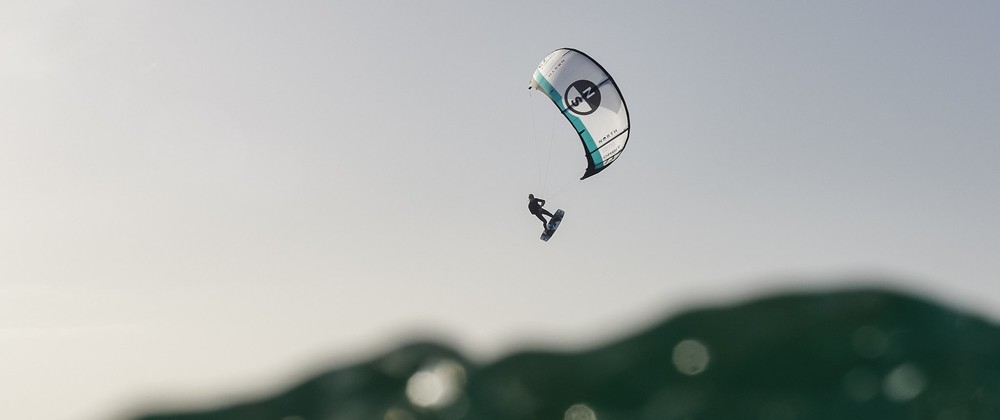
Valdevaqueros lies about nine kilometres north of Tarifa on the road to Cádiz. On Levante it is the safest choice in Tarifa, because the wind arrives slightly lighter here than on the town beach. When the sand is flying at Los Lances, the drive is almost always worth it.
On Poniente, Valdevaqueros is more of a light-wind spot. In summer the thermal often adds a few knots compared with the other spots, especially when the forecast looks weak. The beach is narrower than Los Lances and fills up fast in summer, so bring some patience when you rig. There are rocks downwind towards the dune. Keep your distance and plan your landing so you do not drift into that area.
| Water | Chop, moderate waves on Levante |
| Wind | Levante (E) is best; light Poniente (W) with a thermal boost |
| Tide | Makes no difference |
| Level | All levels |
| Watch out for | Rocks downwind by the dune, crowds in summer |
| Getting there | From Tarifa towards Cádiz, take one of the beach exits after about nine kilometres |
Balneario
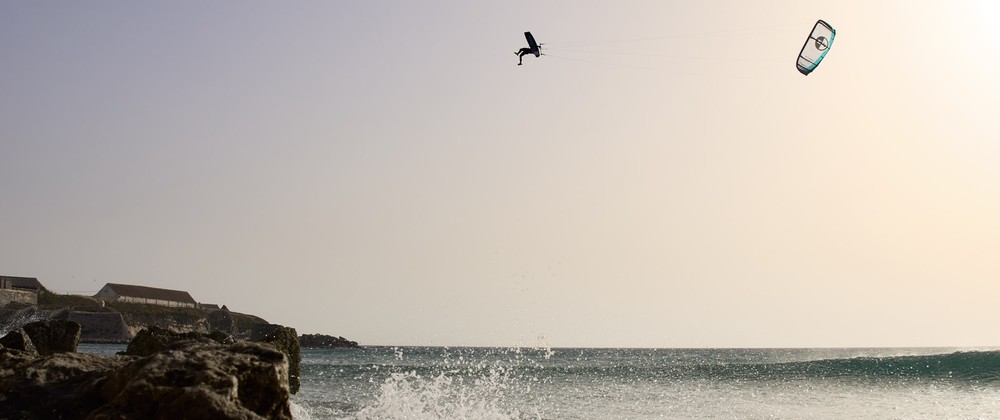
Balneario is the big air spot right by the old town, and it only works on Levante. The wind blows offshore and hard here, but fairly steadily. It irons the water flat or, after a switch from Poniente to Levante, builds perfect kickers. That is exactly why the pros go so high here, and exactly why the spot does not forgive mistakes.
There is no rescue service, and if something goes wrong in an offshore wind, you drift out into the open water of the Strait. On Poniente strong currents come into play, and the spot does not work. Kiting at Balneario is allowed all year round.
Balneario is not a spot for beginners, and not one for intermediates either. Looking out from the beach, there is a rock on the left in the take-off zone. At low tide it sticks out of the water; at high tide it is covered, and that is when it is dangerous, because you can land on it. Check the tide before your session and talk to the locals before you go out.
| Water | Flat water and kickers |
| Wind | Levante (E) only, offshore |
| Tide | Important: a rock on the left of the take-off zone is covered at high tide |
| Level | Pros only |
| Watch out for | Offshore wind, no rescue service, the rock in the take-off zone |
| Getting there | Right by Tarifa old town, allowed all year round |
When is the best time to kitesurf in Tarifa?
The best time to kitesurf in Tarifa is May and September. There is wind all year, but in spring and autumn the wind, the weather and the space on the water line up best. July and August are hot, crowded and expensive. Winter can be good too, but expect more rain and stormier days.
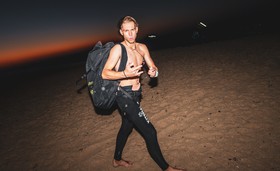
The water never gets really warm. Even in August the average is just over 21 degrees, and on Levante the wind makes it feel colder. You will want a wetsuit all year.
On average the wind is strongest from March to May, at 13 knots with gusts around 20 knots, and lightest from November to January at 10 knots. These figures come from a station in town and are averaged over the daytime hours, so the big Levante and Poniente days get smoothed out, but the curve still shows which months are more reliable. Not sure which wetsuit thickness you need? Our wetsuit guide explains it.
What gear do you need for Tarifa?
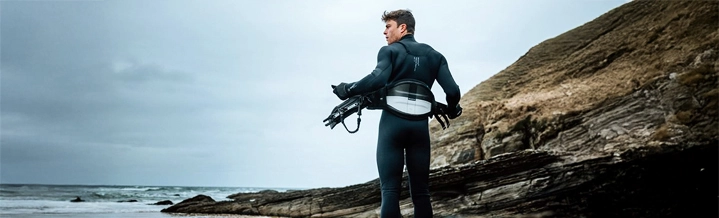
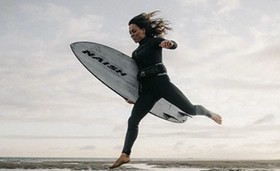
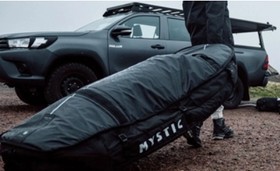
For Tarifa you mainly need smaller kites for the Levante, the right wetsuit and a boardbag for the trip. If you like waves, bring a surfboard for the winter Poniente.
| Bring your own | Wetsuit and harness, because fit is personal for both. Bar and lines if you are particular about them. |
| Rent here | Most of the bigger kite schools have rental. Worth it if you are missing a small kite for the Levante or want to try a surfboard first. |
| Flying with gear | Check your airline’s sports baggage rules before you book; they vary a lot. |
How do you get to Tarifa?
The easiest way to get to Tarifa is to fly into Gibraltar, Jerez or Málaga and hire a car. Tarifa has no airport of its own. You need a car anyway, because Los Lances and Valdevaqueros are several kilometres apart and you switch spots depending on the wind.
| Airport | Getting to Tarifa |
|---|---|
| Gibraltar (GIB) | about 40 minutes by car, including the border crossing into Spain |
| Jerez (XRY) | about 1.5 hours by car |
| Málaga (AGP) | about 2 hours by car |
Drive times are approximate and depend on traffic and, for Gibraltar, on the queue at the border.
Gibraltar is the closest, but you cross the border into Spain on the way, which can add time at busy moments. Jerez and Málaga are further out, and Málaga is the biggest of the three airports.
What can you do in Tarifa on days without wind?
Calm days are rare in Tarifa, but they happen. Start the day slowly with breakfast at Pastelito, a French bakery in Tarifa. The breakfast there is sensational, and on a day without wind there is no reason to rush. After that it is time for a wander through the old town with its narrow streets and castle. The ferry gets you to Tangier in about an hour and drops you right in the city centre. Whale and dolphin watching trips in the Strait also run from town. And in winter, surfing is a real alternative: when the Poniente brings swell, the surf in Tarifa is really good.
What is the nightlife like in Tarifa?
After the session, the evening moves to the old town. Inside the old walls, the narrow streets are full of small bars, and in the summer months the party never stops: the streets stay busy until the early hours and the clubs only really get going after midnight.
The place to be for kiters is Exit Bar, the kitesurfer bar in the old town. This is where riders from all over the world meet up after a day on the water to talk about the session, the wind and tomorrow’s forecast. Just check the forecast before you order the next round: if the Levante is due tomorrow, you will want to be on the beach early.
Frequently asked questions
Is Tarifa good for kitesurfing beginners?
Tarifa is good for kitesurfing beginners if you learn with a school and ride at Los Lances on Poniente, when the wind blows side-onshore. On Levante, Los Lances is offshore and gusty, and Balneario is for pros only. Learning without a school is not a good idea in Tarifa.
When is the best time to kitesurf in Tarifa?
The best time to kitesurf in Tarifa is May and September. There is wind all year, but spring and autumn combine good wind with fewer crowds and pleasant temperatures. July and August are hot and very busy.
What is the closest airport to Tarifa?
The closest airport to Tarifa is Gibraltar, about 40 minutes by car including the border crossing into Spain. Jerez is about 1.5 hours away and Málaga about 2 hours.
Can you kite in the Tarifa lagoon?
No. The lagoon behind the beach at the Río Jara lies inside a nature park. Kiting there is banned, and offenders are fined.
Is it always windy in Tarifa?
Tarifa has wind on the vast majority of days, either the Poniente from the west or the Levante from the east. Calm days happen but are rare. More often the wind is simply wrong for your favourite spot and you need to switch beaches.
If you kite here and something in this guide is outdated or missing, email it to info@kitemana.com. We check every tip and add the good ones to this guide.
You have no product(s) in you basket.
Not sure where to start?
Contact our customer service for advice
